
Math Olympiad Elementary PDF: A Comprehensive Guide
Exploring elementary math olympiad PDFs reveals resources like contest problems for various levels, solutions journals, and training materials. These documents aid preparation and skill development.
What is a Math Olympiad?
Math Olympiads are challenging mathematical competitions designed to stimulate and reward mathematical creativity. They aren’t simply about recalling formulas; instead, they emphasize problem-solving skills, logical reasoning, and mathematical thinking. For elementary students, these competitions present a unique opportunity to engage with mathematics beyond the standard curriculum.
Specifically, an elementary math olympiad introduces students to problems that require more in-depth understanding and innovative approaches. These problems often delve into areas like number theory, geometry, and combinatorics, presented in a way that encourages exploration and discovery. The format typically involves individual and sometimes team rounds, with problems increasing in difficulty.
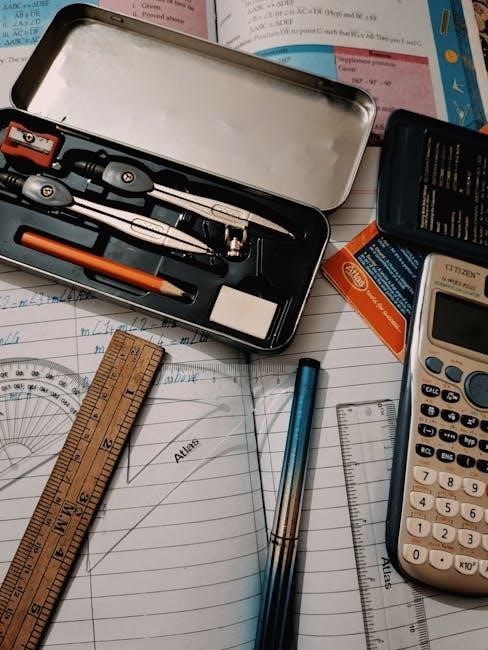
Resources available as PDFs, such as those from MathCounts or the Balkan Mathematical Olympiad, showcase the types of questions students might encounter. These PDFs often include past contest papers and solutions, providing valuable practice material. The goal isn’t necessarily to win, but to foster a love for mathematics and build confidence in tackling complex challenges. Participating in these events prepares students for higher-level mathematical pursuits.
Benefits of Participating in Math Olympiads for Elementary Students
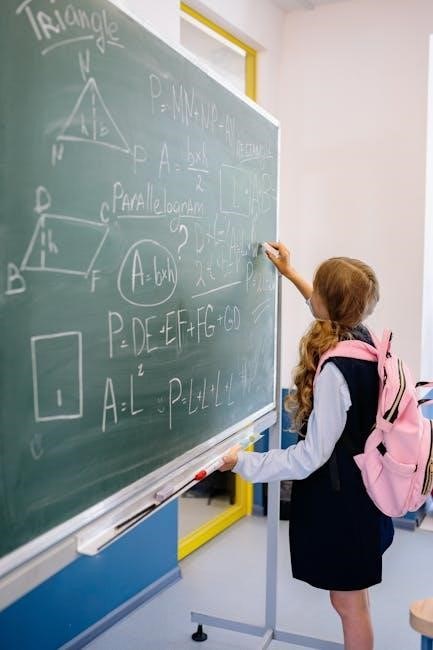
Engaging in math olympiads offers elementary students a wealth of benefits extending far beyond improved test scores. These competitions cultivate critical thinking skills, enhancing a student’s ability to analyze problems and devise creative solutions – skills valuable in all academic areas and life itself.
Furthermore, olympiads foster a deeper understanding of mathematical concepts. Working through challenging problems, often found in available PDF resources like those from the Indian Mathematical Olympiad, encourages students to explore the ‘why’ behind the ‘how,’ solidifying their foundational knowledge. This proactive learning approach builds confidence and a positive attitude towards mathematics.
Access to past papers in PDF format, such as those from the British Mathematical Olympiad, provides invaluable practice. Beyond academics, participation promotes perseverance, resilience, and the ability to handle pressure. It also introduces students to a community of like-minded peers, fostering collaboration and a shared passion for mathematical exploration. Ultimately, it’s an investment in their intellectual growth.
Where to Find Elementary Math Olympiad PDFs
Locating elementary math olympiad PDFs requires knowing where to search. Numerous online resources offer past contest papers and problem sets. Websites dedicated to mathematical competitions frequently archive materials from events like MathCounts, providing Sprint Round problems in PDF format for practice.
Additionally, educational institutions and math enthusiast communities often maintain collections of downloadable PDFs. Resources like the “Elementary Problems and Solutions” journal, while potentially requiring subscription access, can offer valuable problem sets. Exploring university websites with strong math departments may also yield archived olympiad materials.
Specific olympiads, such as the Balkan Mathematical Olympiad and the International Mathematical Olympiad (IMO), often have dedicated websites or repositories where past problems and solutions are available as PDFs. Searching for “[Olympiad Name] problems PDF” is a useful starting point. Remember to verify the source’s credibility before downloading any files, ensuring they are legitimate contest materials.
Popular PDF Resources: A Detailed Overview
Several PDF resources stand out for elementary math olympiad preparation. “Math Olympiad Contest Problems for Elementary and Middle Schools” is a highly-rated compilation, offering a broad range of problems and solutions, often scoring 5.0/1.0 in reviews. MathCounts materials, particularly Sprint Round PDFs from years like 2009, provide focused practice on timed problem-solving.
The “Elementary Problems and Solutions” journal, though potentially subscription-based, presents challenging problems and detailed solutions, fostering deeper understanding. For advanced students, “103 Trigonometry Problems” – sourced from USA IMO training – offers rigorous preparation. Balkan Mathematical Olympiad PDFs, like those from the 2014 competition in Pleven, Bulgaria, showcase international-level problems.
Furthermore, resources like the Indian Mathematical Olympiad (1991) and British Mathematical Olympiad (2003/4) Round 1 PDFs provide exposure to diverse problem-solving approaches. IMO 1997 materials offer insights into the highest level of mathematical competition. These resources collectively build a strong foundation.
Math Olympiad Contest Problems for Elementary and Middle Schools
These problems, frequently available in PDF format, are designed to challenge students beyond standard curriculum expectations. They often require creative problem-solving skills and a strong grasp of fundamental mathematical concepts. Resources like dedicated contest problem books specifically target this age group, offering a curated selection of past competition questions.
The problems typically span various mathematical areas, including number theory, geometry, combinatorics, and algebra. Difficulty levels vary, catering to a range of abilities within the elementary and middle school spectrum. Many PDFs include detailed solutions, allowing students to learn from their mistakes and understand different approaches.
Accessing these PDFs is crucial for effective preparation. They provide invaluable practice in applying mathematical knowledge to non-routine problems, building confidence and fostering a deeper appreciation for the subject. Some resources even categorize problems by topic and difficulty, facilitating targeted practice.
MathCounts Sprint Round Problems (PDF Availability)
MathCounts Sprint Round problems, a key component of the MathCounts competition, are widely accessible in PDF format online. These PDFs typically contain sets of problems from past competitions, offering invaluable practice material for aspiring mathletes. The 2009 Sprint Round is specifically mentioned as a readily available resource.
The Sprint Round focuses on individual problem-solving speed and accuracy. Problems cover a broad range of middle school math topics, including arithmetic, algebra, geometry, number theory, and probability. PDFs often include answer keys, allowing students to self-assess their performance and identify areas for improvement.
Finding these PDFs is relatively straightforward through online searches and the official MathCounts website. Utilizing past Sprint Round problems is a highly effective strategy for familiarizing oneself with the competition format and building essential problem-solving skills. The luck-based nature of some problems is noted, highlighting the importance of broad preparation.
Elementary Problems and Solutions Journal
The “Elementary Problems and Solutions” journal serves as a valuable resource for students and educators involved in math olympiads. This publication focuses on presenting new and challenging mathematical problems, specifically tailored for the elementary and middle school levels, alongside their detailed solutions.
Its primary purpose is to foster mathematical thinking and problem-solving abilities among young students. The journal provides a platform for exploring diverse mathematical concepts and techniques, encouraging a deeper understanding beyond standard curriculum. Access to this journal, often available in PDF format, allows students to engage with complex problems and learn from established solution methods.
The problems featured are designed to be stimulating and accessible, promoting independent learning and critical thinking. By studying the solutions, students can gain insights into effective problem-solving strategies and enhance their mathematical intuition. It’s a crucial tool for preparation and continued mathematical growth.
USA International Mathematical Olympiad (IMO) Trigonometry Problems
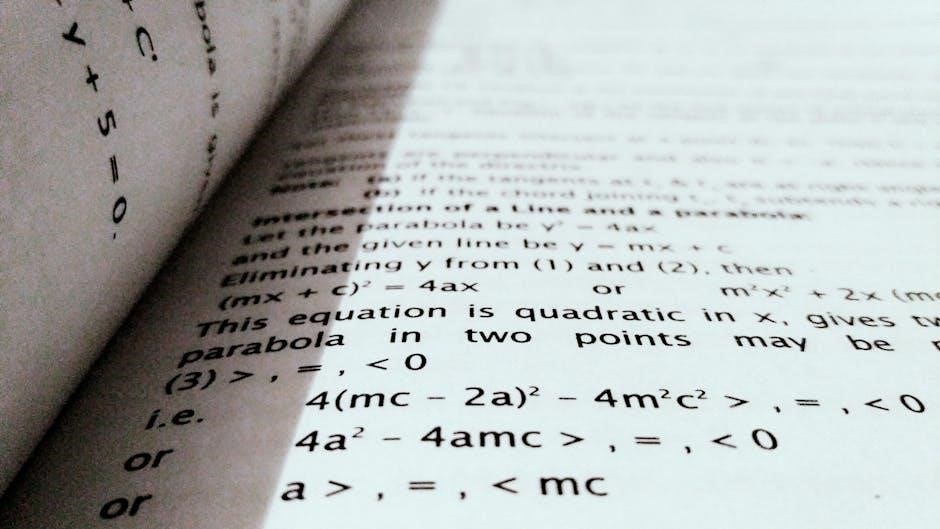
While seemingly advanced, exploring trigonometry problems used in the USA International Mathematical Olympiad (IMO) training can indirectly benefit elementary students preparing for math olympiads. A collection of 103 highly-selected problems and solutions, often available as a PDF, showcases the depth and complexity of mathematical challenges at the international level.

Though these problems are beyond the typical elementary curriculum, examining the underlying principles and problem-solving approaches can inspire more advanced thinking. Exposure to these concepts, even passively, can broaden a student’s mathematical horizon and encourage exploration beyond basic arithmetic and geometry.
The resource serves as a benchmark for advanced mathematical skills, demonstrating the level of proficiency required for international competitions. It’s a valuable resource for teachers and mentors seeking to challenge their students and foster a passion for mathematical excellence, even if direct application isn’t immediate.
Downloading Math Olympiad Contest Problems PDFs
Accessing Math Olympiad contest problems in PDF format is crucial for effective preparation. Several online resources offer downloadable PDFs containing past papers and practice questions for elementary and middle school students. A specific document provides information and instructions for downloading a PDF titled “Math Olympiad Contest Problems For Elementary And Middle Schools,” streamlining the process.
These PDFs often categorize problems by difficulty and topic, allowing students to focus on areas needing improvement. Websites dedicated to mathematical competitions frequently host archives of past contests, readily available for download. Utilizing search terms like “Math Olympiad PDF” or “elementary math contest problems” yields numerous results.
However, verifying the source’s credibility is essential to ensure the problems are authentic and aligned with recognized olympiad standards. Always prioritize reputable organizations and educational platforms when downloading these resources to guarantee quality and accuracy in your preparation.
Balkan Mathematical Olympiad Problems and Solutions (PDFs)
The Balkan Mathematical Olympiad (BMO) offers challenging problems suitable for advanced elementary and middle school students seeking rigorous practice. PDFs containing problems and solutions from past BMO competitions are valuable resources for honing problem-solving skills. Specifically, a document summarizes problems and solutions from the 31st BMO, held in Pleven, Bulgaria in 2014, featuring four intricate problems.
These PDFs typically present problems across various mathematical domains, including number theory, geometry, algebra, and combinatorics. Studying BMO problems exposes students to unique and creative problem-solving approaches, enhancing their mathematical intuition. Accessing these resources allows students to benchmark their abilities against regional competition standards.
While primarily geared towards secondary school students, some BMO problems are accessible to exceptionally gifted elementary students. Utilizing these PDFs alongside other elementary-level resources provides a well-rounded preparation strategy for math olympiads.
Indian Mathematical Olympiad Problems (1991 PDF)
The Indian Mathematical Olympiad (IMO) provides a challenging platform for students to demonstrate their mathematical prowess. A PDF document containing problems from the 6th Indian Mathematical Olympiad, held in 1991, is a valuable resource for aspiring contestants. This collection features ten problems spanning diverse mathematical topics, offering a glimpse into the competition’s historical problem-solving style.
These problems cover areas like number theory, geometry, and algebra, requiring students to apply their knowledge creatively. Working through these problems helps develop critical thinking and problem-solving skills essential for success in math olympiads. The 1991 problems, while dated, still present a good level of difficulty and can serve as excellent practice material.
Although designed for a specific year, the concepts tested remain relevant. Utilizing this PDF alongside more recent resources provides a comprehensive preparation strategy, exposing students to a range of problem types and approaches.
British Mathematical Olympiad Round 1 (2003/4 PDF)
The British Mathematical Olympiad (BMO) Round 1, specifically the 2003/4 paper, offers a fantastic resource for students preparing for math competitions. A readily available PDF contains instructions and a set of five challenging problems designed to assess mathematical reasoning and problem-solving abilities. This round serves as an initial screening process, identifying talented students for further stages.

The problems typically involve a mix of number theory, algebra, and geometry, demanding both conceptual understanding and skillful application of mathematical techniques. The first problem in the 2003/4 paper focuses on solving a system of equations, a common theme in olympiad-level mathematics. Working through these problems builds confidence and familiarity with the BMO’s style.
Utilizing this PDF allows students to practice under timed conditions, simulating the actual exam environment. It’s a valuable tool for self-assessment and identifying areas for improvement.
International Mathematical Olympiad (IMO) 1997 Problems and Solutions
The 1997 International Mathematical Olympiad (IMO) problems and solutions represent a pinnacle of mathematical challenge, even serving as valuable practice for elementary-level students aiming for advanced competition preparation. While the problems themselves are beyond typical elementary curricula, studying the approaches to solving them can inspire deeper mathematical thinking.
This resource focuses on right-angled triangles and explores problems designed for highly skilled students. Examining the solutions reveals sophisticated techniques in geometry, number theory, and algebraic manipulation. Though direct application to elementary olympiads is limited, understanding the problem-solving methodologies is incredibly beneficial.
Accessing the 1997 IMO problems and solutions PDF provides insight into the highest levels of mathematical competition. It demonstrates the elegance and creativity possible within mathematics, encouraging students to explore beyond standard textbook exercises and cultivate a passion for problem-solving.
Types of Problems Found in Elementary Math Olympiads
Elementary math olympiads typically feature problems extending beyond standard curriculum, demanding creative problem-solving skills. These challenges broadly fall into several key categories: number theory, geometry, and combinatorics, each requiring distinct approaches.
Number theory problems often involve divisibility, prime numbers, and modular arithmetic, testing a student’s understanding of fundamental number properties. Geometry problems focus on shapes, angles, and spatial reasoning, frequently requiring visualization and logical deduction. Combinatorics explores counting techniques and arrangements, challenging students to systematically analyze possibilities.
PDF resources for elementary math olympiads showcase these problem types. Exposure to diverse examples is crucial for preparation. While some problems may appear luck-based, a solid foundation in these core areas, coupled with practice, significantly improves performance. Mastering these categories builds a versatile skillset for tackling complex mathematical challenges.
Number Theory Problems in Elementary Olympiads
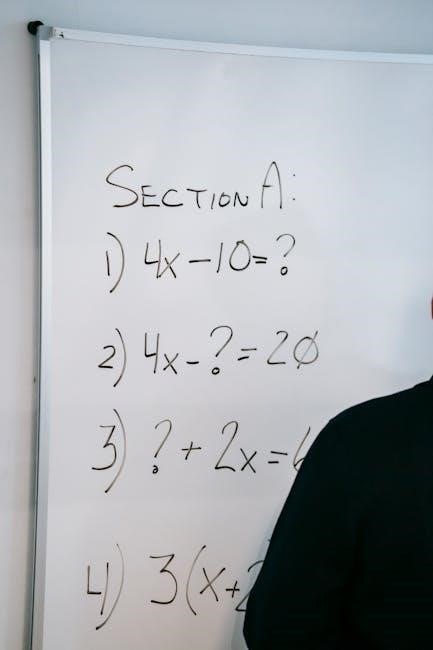
Number theory constitutes a significant portion of elementary math olympiad problems, focusing on the properties and relationships of integers. These problems frequently involve concepts like divisibility, prime factorization, and remainders, requiring students to think logically about numbers.
Typical challenges include finding factors, determining if a number is prime, or solving problems related to the greatest common divisor (GCD) and least common multiple (LCM). Modular arithmetic, exploring remainders after division, also appears frequently. PDF resources often present problems requiring students to apply these concepts in creative ways.
For example, problems might ask students to find the smallest number with specific divisibility properties or to determine the number of factors a given number possesses. Success in number theory demands a strong understanding of fundamental principles and the ability to apply them strategically. Practice with diverse PDF examples is key to mastering these concepts.
Geometry Problems in Elementary Olympiads
Geometry consistently features prominently in elementary math olympiads, testing students’ spatial reasoning and understanding of shapes, angles, and areas. These problems often move beyond rote memorization of formulas, demanding creative problem-solving skills and visualization abilities.
Common themes include finding areas and perimeters of various shapes, exploring properties of triangles and quadrilaterals, and working with angles. Problems frequently involve diagrams, requiring students to carefully analyze geometric relationships. PDF resources provide a wealth of visual problems for practice.
Students might encounter challenges involving symmetry, transformations (rotations, reflections, translations), or problems requiring them to deduce unknown angles or side lengths. A solid grasp of basic geometric principles, combined with the ability to apply them in novel situations, is crucial. Utilizing PDF practice sets builds confidence and sharpens geometric intuition.
Combinatorics Problems in Elementary Olympiads
Combinatorics, the art of counting, presents a unique challenge in elementary math olympiads. These problems focus on determining the number of possible arrangements, selections, or configurations, often without explicitly listing them all. They require logical thinking and systematic approaches rather than complex calculations.
Typical combinatorics problems involve counting the number of ways to form teams, arrange objects in a sequence, or select items from a set. Elementary students might encounter scenarios like determining the number of different handshakes possible in a group or the number of ways to color a grid with specific constraints. PDF resources offer diverse examples.
Strategies for tackling these problems include using the fundamental counting principle, identifying patterns, and employing techniques like listing systematically or drawing diagrams. Mastering combinatorics enhances problem-solving skills applicable beyond mathematics. Accessing PDF practice materials is vital for building proficiency in this area.
Strategies for Solving Elementary Math Olympiad Problems
Success in elementary math olympiads hinges on developing effective problem-solving strategies. Beyond rote memorization, students must cultivate a flexible and analytical mindset. A crucial first step is understanding the problem thoroughly – identifying what’s given, what’s asked, and any underlying constraints.

Common strategies include drawing diagrams, looking for patterns, working backwards, and simplifying the problem. Breaking down complex problems into smaller, manageable parts is often beneficial. Utilizing estimation and logical reasoning can help eliminate incorrect answer choices. PDF resources frequently showcase these techniques.
Practice with a variety of problems, readily available in PDF format, is paramount. Analyzing solutions – both correct and incorrect – provides valuable insights. Don’t be afraid to experiment with different approaches and learn from mistakes. Time management during the contest is also key; allocate time wisely to each problem.