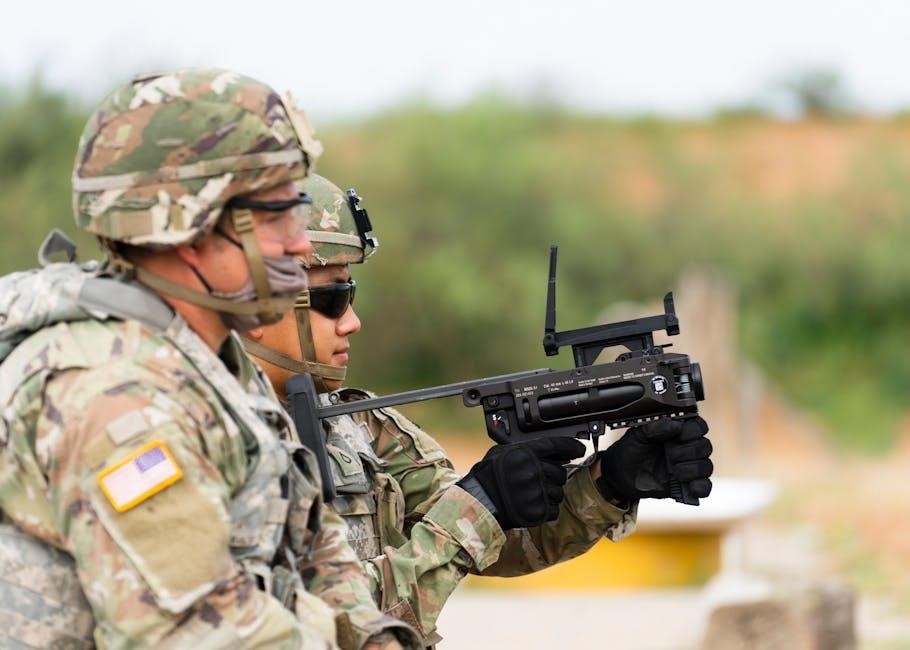
FM 3-05.70, the U.S. Army Survival Guide, is a comprehensive resource detailing techniques for surviving in diverse and challenging environments.
This manual, updated in recent editions, provides essential knowledge for soldiers and anyone facing survival scenarios, emphasizing adaptability and resourcefulness.
It’s built upon the core principle of SURVIVAL, guiding actions through a memorable acronym, and covers planning, medicine, and field expedient methods.
Historical Context and Evolution
US Army survival training has evolved significantly since its inception, initially focusing on basic wilderness skills for soldiers operating in varied terrains. Early manuals, developed during and after World War II, emphasized evasion and escape from enemy capture, alongside fundamental survival techniques.
The Cold War era spurred advancements, incorporating strategies for surviving in extreme climates and potential nuclear, biological, and chemical warfare scenarios. FM 3-05.70 represents a culmination of this historical development, continually updated to reflect modern threats and lessons learned from contemporary conflicts.
Recent revisions prioritize adaptability, resourcefulness, and psychological resilience, acknowledging the complex challenges of modern survival situations.
Purpose and Scope of the Manual (FM 3-05.70)
FM 3-05.70 serves as the definitive guide for US Army personnel on all aspects of survival, encompassing pre-survival planning, survival execution, and post-survival procedures. Its primary purpose is to equip soldiers with the knowledge and skills to survive and return from hostile environments.
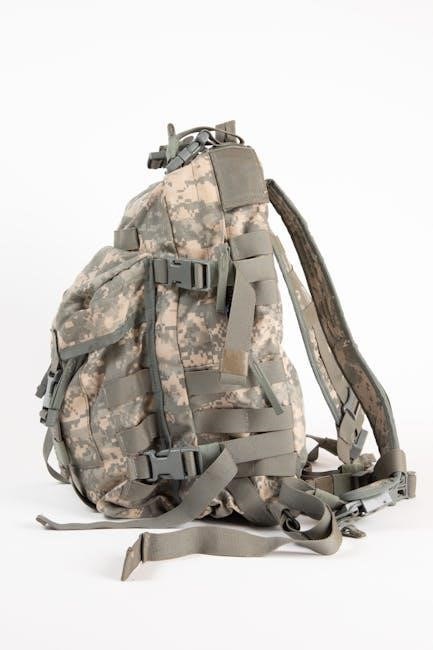
The manual’s scope is incredibly broad, covering topics from shelter construction and water procurement to foraging, fire starting, field expedient weaponry, navigation, and medical care. It details evasion and escape techniques, emphasizing psychological fortitude.
It’s designed for both individual and collective survival scenarios, offering guidance applicable to diverse operational contexts.
The Core Principles of Survival – The “SURVIVAL” Acronym
The US Army’s survival doctrine centers on the SURVIVAL acronym, a mnemonic device to guide actions during crises and enhance the will to live.
S ⎯ Size Up the Situation
S stands for “Size Up the Situation,” the initial and arguably most critical step in survival. This involves a thorough assessment of your immediate surroundings, including terrain, weather conditions, and potential hazards.
Understanding available resources – water, shelter materials, potential food sources – is paramount. Equally important is evaluating your own condition: injuries, fatigue, and available equipment.
A calm, methodical assessment minimizes panic and allows for informed decision-making. Prioritize immediate threats and formulate a plan based on realistic expectations. This initial evaluation dictates subsequent actions, maximizing chances of a positive outcome.
U ― Utilize All Resources
U represents “Utilize All Resources,” a cornerstone of survival philosophy. This extends beyond conventional supplies to encompass everything the environment offers. Think creatively about potential uses for natural materials – plants for shelter, stones for tools, and water sources for hydration.
Even seemingly useless items can be repurposed. Scavenge thoroughly, but responsibly, and remember that ingenuity is often more valuable than equipment. Prioritize resource conservation; avoid waste and plan for long-term sustainability.
Effective resource utilization dramatically increases your odds of enduring a prolonged survival scenario.
R ― Remember What You Are Trained To Do
R stands for “Remember What You Are Trained To Do.” This emphasizes the critical importance of recalling established skills and procedures during a stressful survival situation. Panic can erase valuable knowledge, so consciously access your training.
Whether it’s first aid, shelter building, or navigation, rely on practiced techniques. Mental rehearsal beforehand strengthens recall under pressure. Don’t attempt complex maneuvers you haven’t mastered; stick to fundamentals.
Your training is your greatest asset; leveraging it maximizes efficiency and minimizes risk.
V ― Vanquish Fear and Panic
V signifies “Vanquish Fear and Panic.” This is paramount for effective survival. Fear impairs judgment and hinders rational decision-making, potentially leading to errors. Acknowledge your fear, but don’t let it control you.
Employ techniques like deep breathing and positive self-talk to regain composure. Focus on immediate tasks and break down overwhelming situations into manageable steps.
Remembering your training (see ‘R’) also combats panic. Maintaining a calm, focused mindset dramatically increases your chances of survival.
I ⎯ Improvise
I stands for “Improvise.” Survival often demands resourcefulness and the ability to create solutions from available materials. The US Army Survival Field Manual emphasizes adapting to circumstances and utilizing whatever is at hand.
This could involve constructing shelter from natural elements, fashioning tools for hunting or defense, or finding alternative water sources. Think creatively and don’t be limited by conventional ideas.
Improvisation is key when standard equipment is unavailable or insufficient. A resourceful mindset significantly enhances your adaptability and resilience in a survival situation.
V ― Value Your Life
V represents “Value Your Life,” a fundamental principle within the US Army Survival Field Manual. This isn’t merely a statement of self-preservation, but a driving force behind every decision and action taken during a survival scenario.
Maintaining a strong will to live fuels determination and resilience. It encourages proactive problem-solving and a refusal to succumb to despair. Prioritize your well-being, conserve energy, and make calculated risks.
Recognizing your inherent worth is crucial for overcoming psychological challenges and enduring hardship, ultimately increasing your chances of survival.
A ― Act Like the Opponent is Watching
The US Army Survival Field Manual emphasizes “Act Like the Opponent is Watching” as a critical mindset for evasion and escape. This principle dictates maintaining operational security even when believing you are alone.
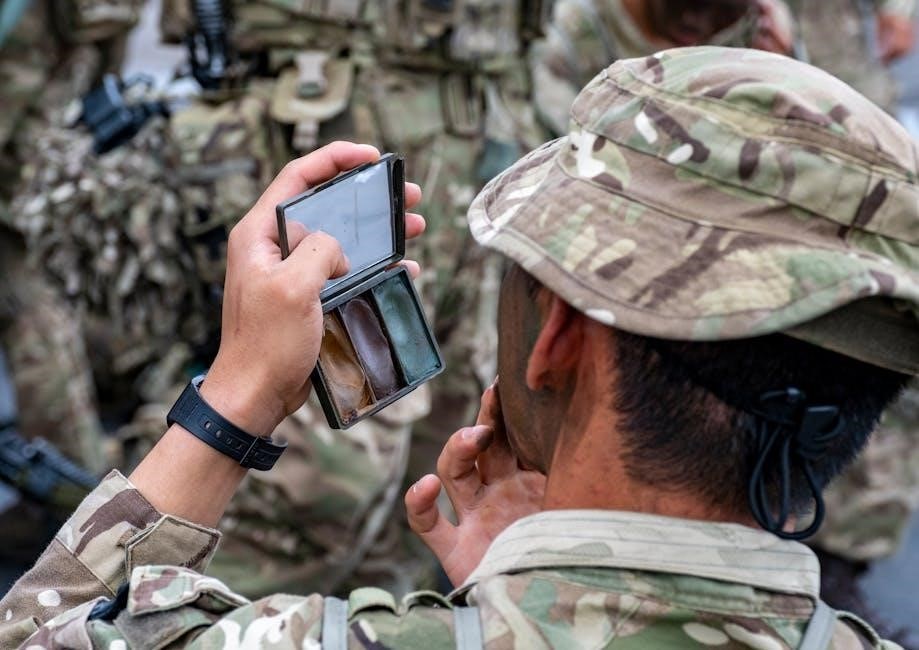
Assume any actions could be observed, influencing choices regarding shelter construction, fire starting, and movement. Concealment and camouflage become paramount, minimizing visual and auditory signatures.
Disciplined behavior reduces the risk of detection, increasing the likelihood of successfully avoiding capture or hostile forces. This proactive approach enhances overall survival probability.
L ⎯ Live by the Rules of 3s
The US Army Survival Field Manual highlights the “Rules of 3s” as a prioritization guide during survival situations. This principle dictates that a human can survive roughly three minutes without air, three hours without shelter in harsh conditions, and three days without water.
Prioritizing these needs – air, shelter, water – is crucial for maximizing survival chances. Addressing these immediate threats before focusing on longer-term concerns like food is paramount.
Understanding these timeframes fosters efficient resource allocation and decision-making, significantly improving the odds of rescue or self-extraction.
Essential Survival Skills
FM 3-05.70 details vital skills including shelter construction, water procurement and purification, foraging for sustenance, and mastering various fire-starting techniques.
Shelter Construction
The US Army Survival Manual (FM 3-05.70) emphasizes shelter as a primary survival need, protecting against the elements and conserving energy. It details various construction methods, ranging from natural shelters like lean-tos utilizing available foliage and branches, to more elaborate structures.
Considerations include site selection – avoiding low-lying areas prone to flooding, and proximity to resources. The manual stresses insulation using leaves, pine needles, or other natural materials to retain body heat.
Different shelter types are suited for varying climates and available resources, with detailed instructions for building debris huts, snow caves, and utilizing natural formations for protection. Prioritizing speed and efficiency is crucial, especially in emergency situations.
Finding and Purifying Water
The US Army Survival Manual (FM 3-05.70) prioritizes locating and securing a potable water source, recognizing its critical importance for survival; It details methods for identifying potential sources – rainfall, dew, streams, and vegetation – and collecting them efficiently.
However, the manual strongly emphasizes purification to eliminate harmful bacteria and pathogens. Recommended methods include boiling for one minute, using water purification tablets, or constructing a field-expedient water filter using charcoal, sand, and gravel.
Understanding waterborne illnesses and preventative measures is crucial, alongside recognizing signs of contaminated water sources. Conserving water through minimizing exertion and utilizing shade is also highlighted.
Foraging for Edible Plants and Insects
The US Army Survival Manual (FM 3-05.70) addresses foraging as a supplementary food source, but stresses extreme caution due to the risk of consuming poisonous plants. Positive identification is paramount; “when in doubt, throw it out” is a key principle.
The manual details recognizing edible plant families and avoiding those with potentially harmful characteristics. Insect foraging is also covered, highlighting protein-rich options like grasshoppers and termites, but emphasizing proper cooking to eliminate parasites.
Knowledge of local flora and fauna, combined with careful observation, is vital for successful and safe foraging, supplementing limited rations during prolonged survival scenarios.
Fire Starting Techniques
The US Army Survival Manual (FM 3-05;70) dedicates significant attention to firecraft, recognizing its importance for warmth, signaling, water purification, and psychological well-being. It details multiple methods, prioritizing those utilizing readily available materials.
Techniques include friction-based methods like the bow drill and hand drill, alongside utilizing magnifying lenses and chemical reactions. Emphasis is placed on gathering appropriate tinder – dry, easily ignitable material – and kindling to build a sustainable flame.
Maintaining a fire requires constant attention, and the manual stresses fire safety and responsible resource management in a survival situation.
Field Expedient Weapons and Tools
The US Army Survival Manual details crafting improvised weapons for hunting and defense, alongside creating essential tools from natural materials for survival needs.
Improvised Weapons for Hunting and Defense
The US Army Survival Manual emphasizes that, lacking conventional weaponry, survival often hinges on crafting effective tools for procuring food and self-protection. This section details constructing spears from sharpened branches, utilizing stone tools for cutting and scraping, and fashioning bows and arrows for ranged hunting.
It also covers creating traps and snares to capture small game, maximizing efficiency with limited resources. For defense, the manual explores building simple barricades and utilizing readily available materials as projectiles or deterrents.
Understanding local materials and employing ingenuity are paramount when fabricating these field-expedient weapons, increasing chances of sustained survival.
Creating Tools from Natural Materials
The US Army Survival Manual dedicates significant attention to resourcefulness, detailing how to fabricate essential tools from the surrounding environment. This includes crafting digging sticks for root foraging, weaving baskets for carrying supplies, and constructing containers from bark or large leaves for water collection.
The manual stresses identifying appropriate materials – strong vines for cordage, suitable stones for hammering, and durable wood for structural components.
Mastering these skills allows survivors to overcome limitations, enhancing their ability to secure food, build shelter, and improve overall living conditions in austere settings.
Navigation and Signaling
The US Army Survival Manual emphasizes map reading and land navigation, alongside techniques for effectively signaling for rescue using various methods and materials.
Map Reading and Land Navigation
The US Army Survival Field Manual dedicates significant attention to map reading and land navigation, recognizing their critical importance when lost or operating in unfamiliar terrain. Proficiency in these skills allows individuals to determine their location, plan routes, and avoid hazards.
The manual details understanding map symbols, utilizing a compass, and employing techniques like terrain association and resection to pinpoint positions. It stresses the importance of orienting a map correctly and accounting for declination.
Furthermore, it covers methods for estimating distances, navigating using natural features, and creating improvised navigation tools when standard equipment is unavailable, ensuring self-reliance in any situation.
Signaling for Rescue
The US Army Survival Field Manual emphasizes that effective signaling dramatically increases chances of rescue. It details various methods, prioritizing those visible from the air. These include creating ground-to-air signals using contrasting materials – rocks, branches, or clothing – forming recognized distress symbols like ‘SOS’ or ‘X’.
The manual also covers utilizing mirrors for reflecting sunlight, building signal fires with dense smoke, and employing brightly colored materials to attract attention.
Understanding signal flares and radio procedures (if available) is also included, stressing the importance of conserving energy and maximizing visibility to potential rescuers.
Survival Medicine and First Aid
FM 3-05.70 dedicates a chapter to survival medicine, covering injury treatment, illness management, and infection prevention in austere environments with limited resources.
Treating Injuries and Illnesses
The US Army Survival Field Manual provides detailed guidance on addressing a wide spectrum of injuries and illnesses encountered in survival situations. It emphasizes initial assessment, stabilization, and ongoing care utilizing available resources.
Specific topics include managing fractures, dislocations, burns, and wounds, alongside recognizing and treating common illnesses like dehydration, hypothermia, and heatstroke.
The manual stresses improvisation of medical supplies – utilizing natural materials for bandages, splints, and wound care.
Furthermore, it details methods for preventing further injury and infection, crucial when professional medical assistance is delayed or unavailable, prioritizing life-saving interventions.
Preventing Infection
The US Army Survival Field Manual dedicates significant attention to infection prevention, recognizing its critical role in long-term survival. Maintaining hygiene in austere environments is paramount, despite limited resources.
The manual details methods for wound cleaning using available water sources – emphasizing purification techniques to minimize bacterial contamination. It also covers creating improvised bandages from natural materials, prioritizing cleanliness.
Recognizing signs of infection – redness, swelling, pus – is crucial for early intervention.
The guide stresses the importance of protecting wounds from further contamination and utilizing natural antiseptics when possible, maximizing chances of recovery.

Evasion and Escape Techniques
The US Army Survival Field Manual details methods for remaining unseen, moving undetected, and skillfully throwing off pursuers, even those utilizing tracking dogs.
Remaining Unseen and Avoiding Detection
The US Army Survival Field Manual emphasizes that successful evasion hinges on minimizing visibility and avoiding detection by enemy forces. This involves understanding concealment – utilizing natural terrain and vegetation to blend into the surroundings.
Movement techniques are crucial; slow, deliberate steps, utilizing shadows and available cover, are paramount. Avoiding skylines and open areas significantly reduces the risk of being spotted.
Furthermore, the manual stresses the importance of understanding how light and shadows affect visibility, and adapting movement accordingly. Minimizing noise, controlling scent, and carefully selecting routes are all vital components of remaining undetected during an evasion scenario.
Throwing Off Trackers (Including Dogs)
The US Army Survival Field Manual details techniques for disrupting pursuit, specifically addressing methods to mislead trackers, even those utilizing canine units. Altering footprints – reversing direction, walking in water, or covering tracks – are fundamental tactics.
Creating false trails with multiple sets of footprints can confuse pursuers, diverting their attention. Utilizing terrain to your advantage, such as rocky or dense vegetation, minimizes track visibility.
When facing tracking dogs, the manual advises employing strong scents like pepper or strong-smelling plants to mask your trail, and regularly changing direction to disrupt the dog’s scent cone.
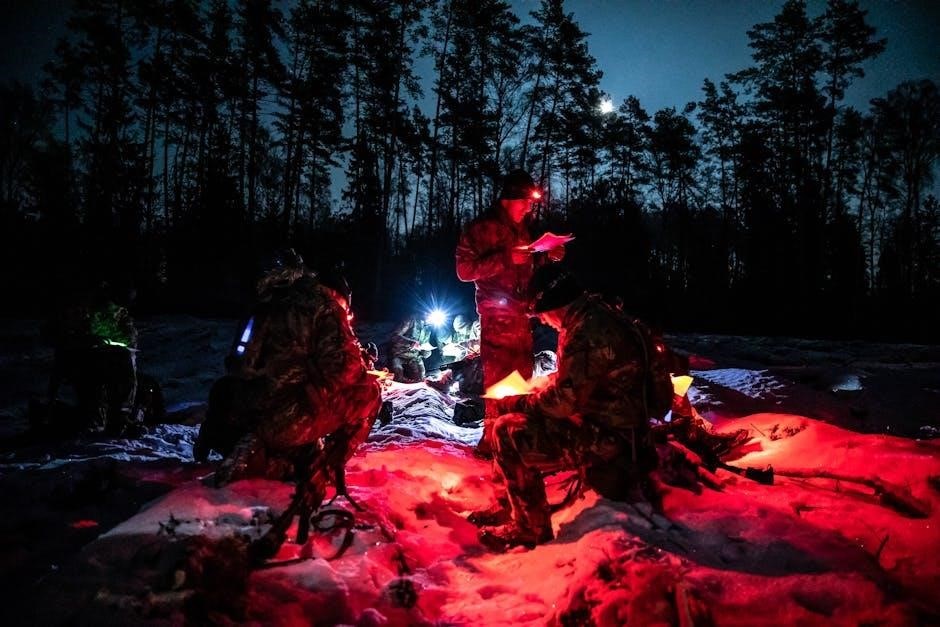
Psychological Aspects of Survival
The US Army Survival Field Manual stresses maintaining morale and mental fortitude, recognizing that psychological resilience is crucial when dealing with stress and prolonged isolation.
Maintaining Morale and Mental Toughness
The US Army Survival Field Manual emphasizes that a positive mental attitude is paramount for survival, often exceeding the importance of physical skills. Cultivating inner strength involves accepting the situation, setting realistic goals, and focusing on achievable tasks.
Maintaining morale requires actively combating fear and panic, utilizing self-talk, and remembering training. Establishing a routine, even a simple one, provides a sense of control and normalcy.
Visualization of success and focusing on reasons to survive—family, duty, or personal values—can bolster mental resilience. The manual suggests acknowledging emotions but preventing them from overwhelming rational thought, ultimately enhancing the will to live.
Dealing with Stress and Isolation
The US Army Survival Field Manual recognizes that prolonged stress and isolation are inevitable challenges in survival scenarios. It advocates for proactive mental strategies to mitigate their effects. Acknowledging and accepting feelings of fear, loneliness, and helplessness is the first step.
Employing mental exercises like recalling positive memories, practicing mindfulness, or engaging in self-dialogue can help maintain psychological equilibrium.
Establishing a daily routine, focusing on small, achievable tasks, and maintaining physical activity are crucial. The manual stresses the importance of avoiding dwelling on negative thoughts and concentrating on the present moment to preserve mental fortitude.

About the author